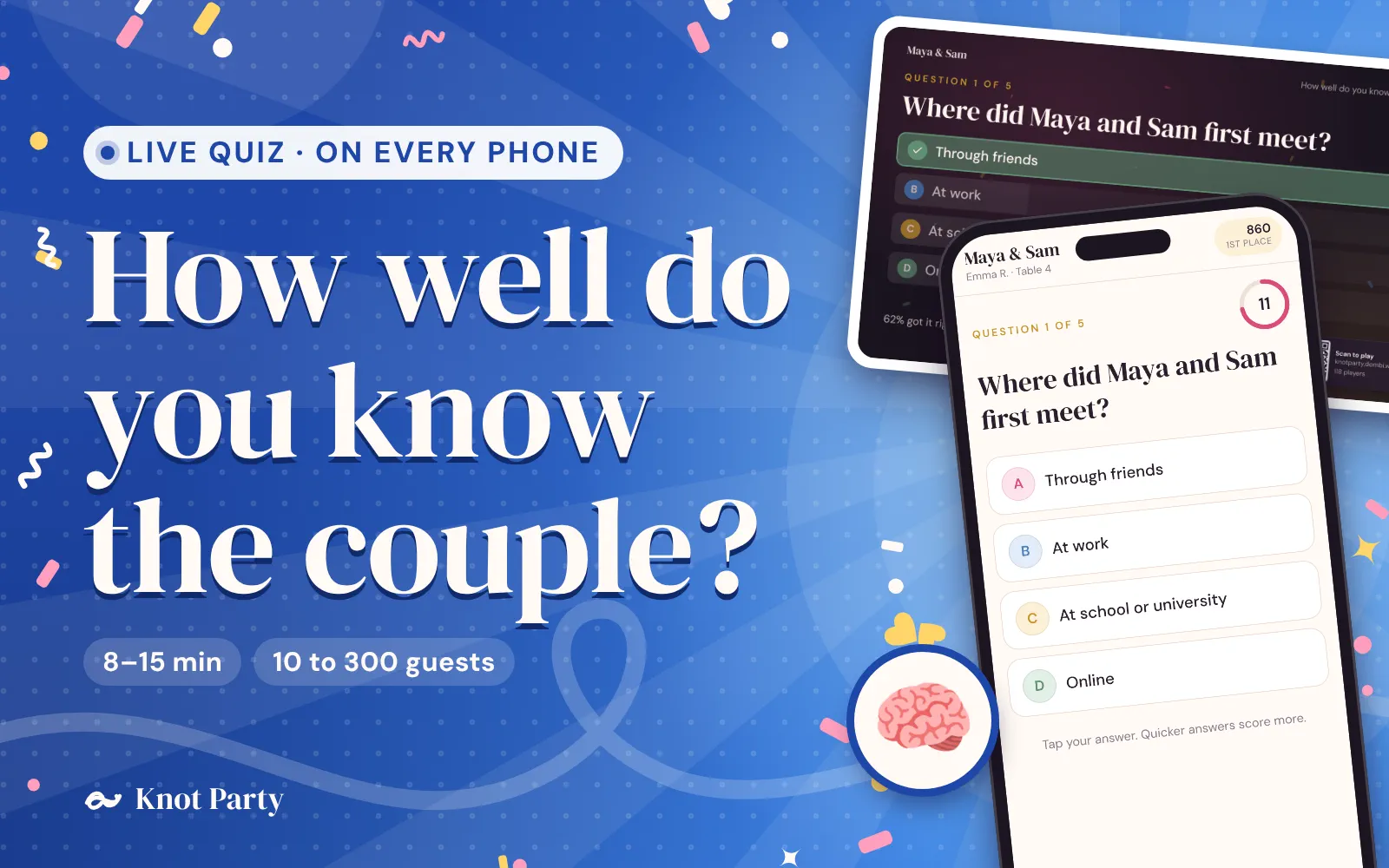
How well do you know the couple
It doubles as the how-we-met story for guests meeting you as a couple for the first time. Eight questions, played once most people have arrived.
- Screen optional
- 8–15 min
Free during our launch: party games for showers, bachelorettes and weddings, unlimited guests, until 28 February 2027. Start your event
Engagement parties
An engagement party is often the first time the two families and friendship groups are in one room. The best games do the introductions for you: they tell the couple's story, give strangers something to compare notes on, and finish before anyone feels they've been made to perform.
That rules out anything long or embarrassing. It rules in short, story-led games where an uncle and a university friend can both have a decent guess. Here are the ones we'd choose, with icebreakers for two families and a running order for a party at home or at a venue.
How well do you know the couple. Timed questions about the two of you, with a leaderboard on the big screen.
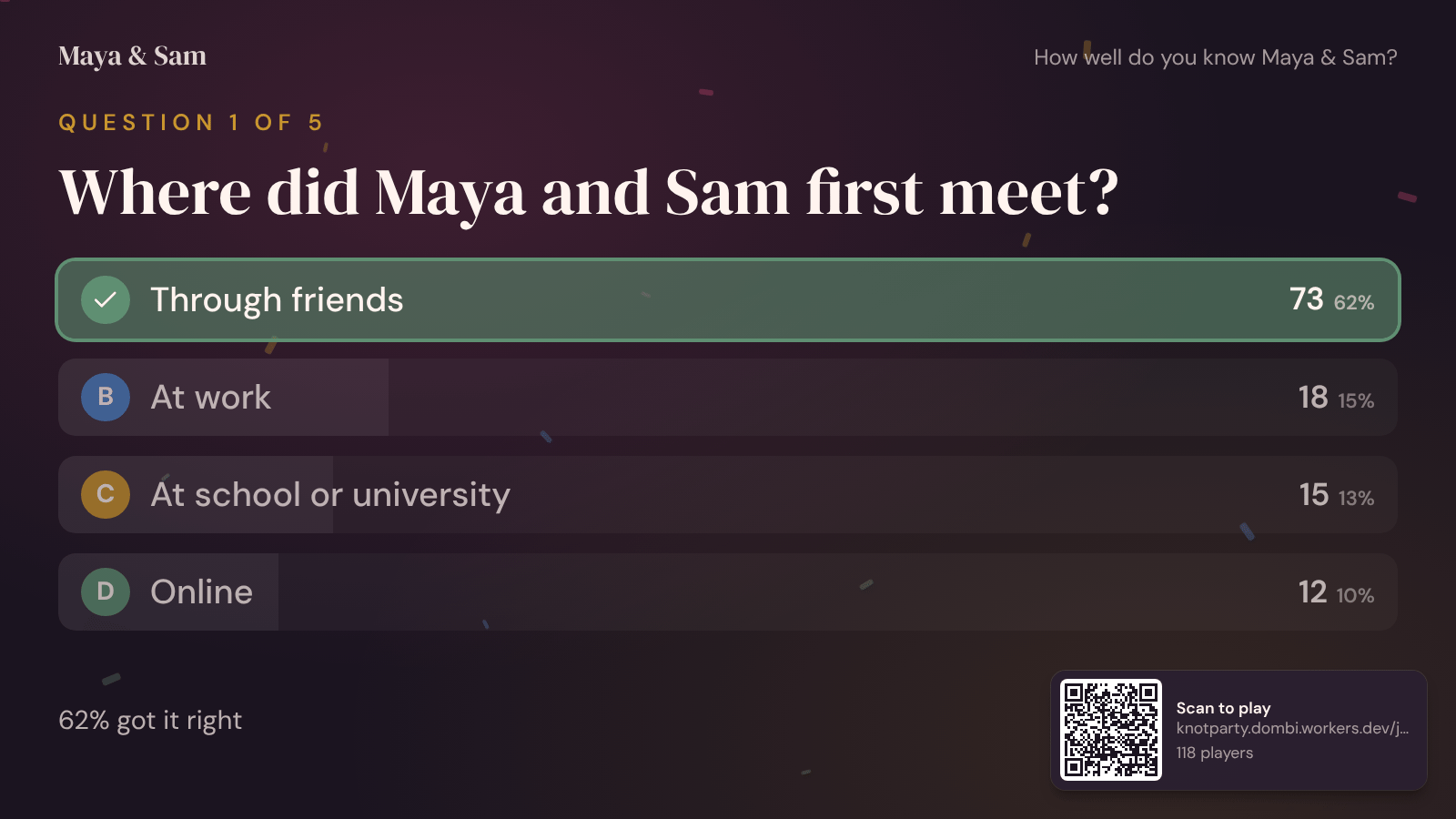
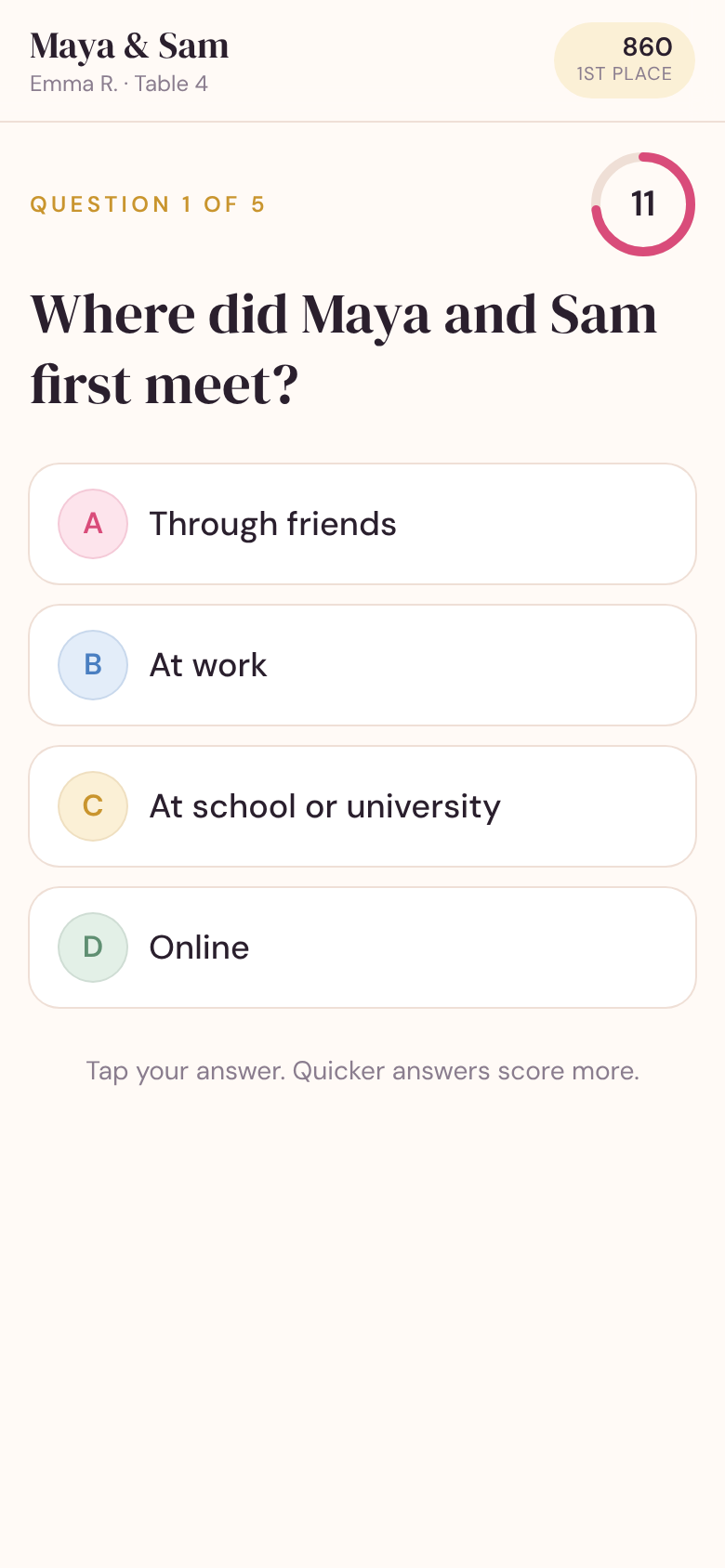
A live demo with pretend guests: tap an answer on the phone and watch it land on the screen. No app, no sign-up.
It doubles as the how-we-met story for guests meeting you as a couple for the first time. Eight questions, played once most people have arrived.
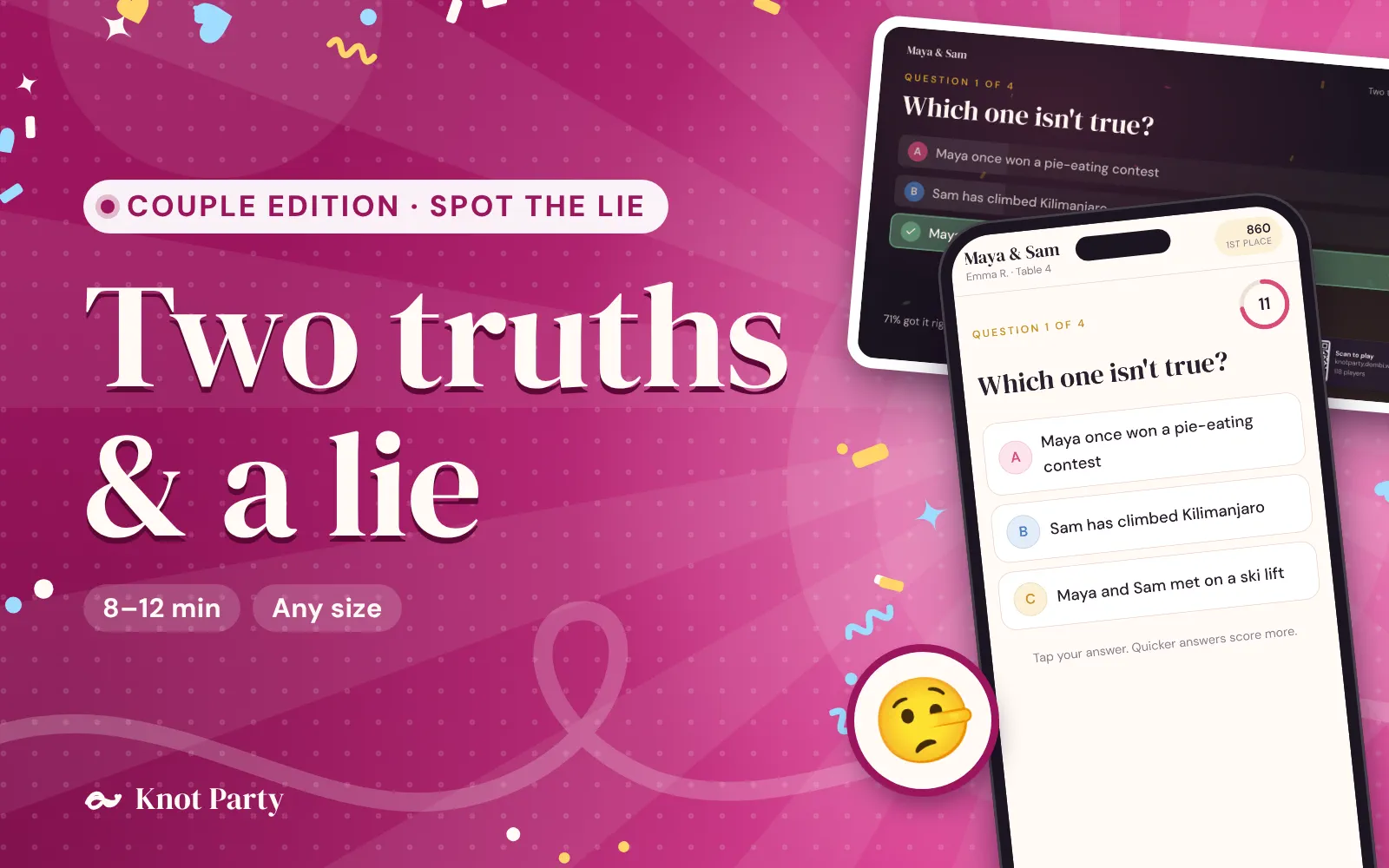
Short and story-led. The reveals give you a chance to tell three anecdotes without making a speech.
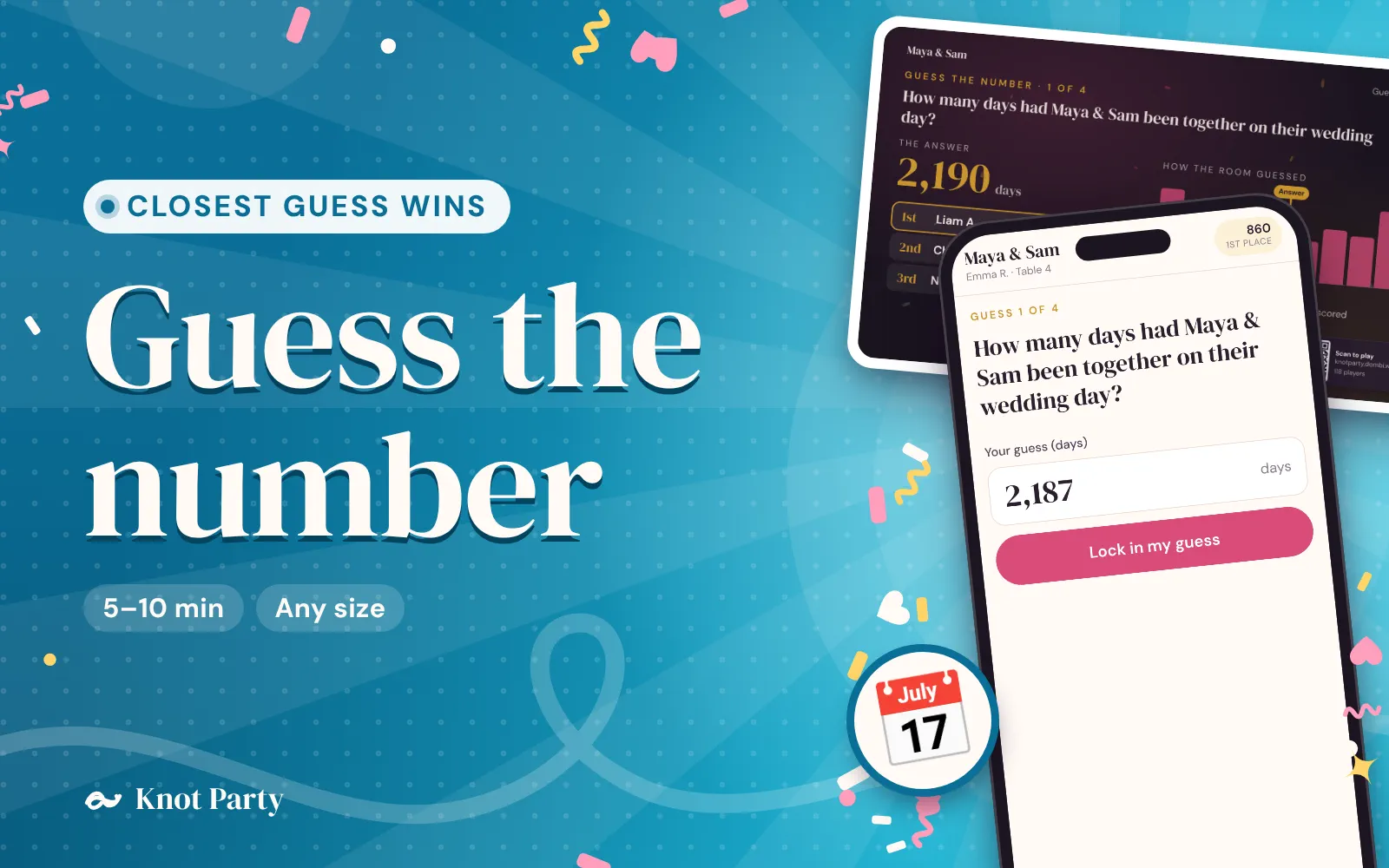
"How many days since their first date?" is a question every guest can attempt, whether they've known you for ten years or ten minutes.
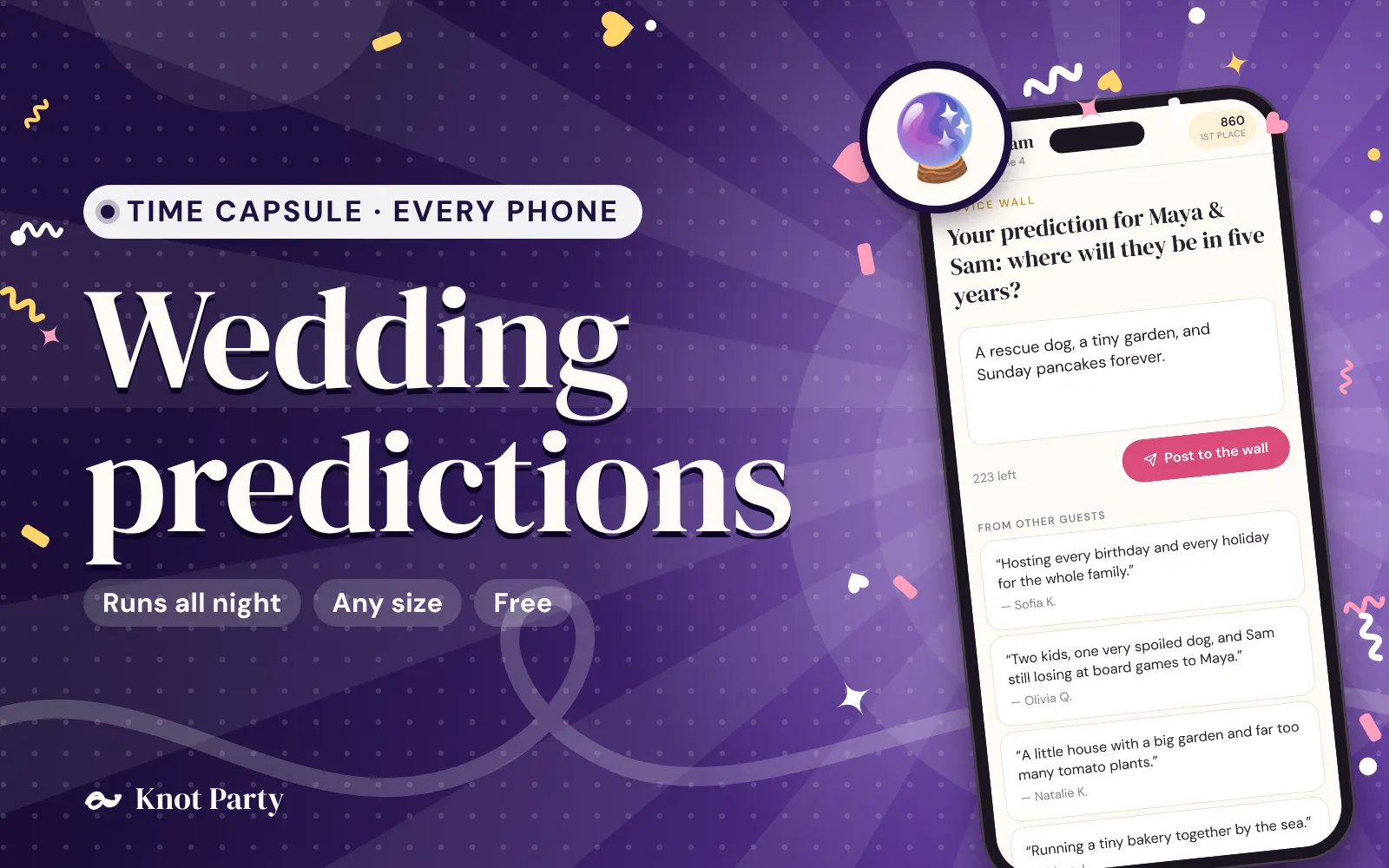
Ask guests to predict the wedding itself: who will cry first, how late will the speeches run. Open them on the wedding morning.
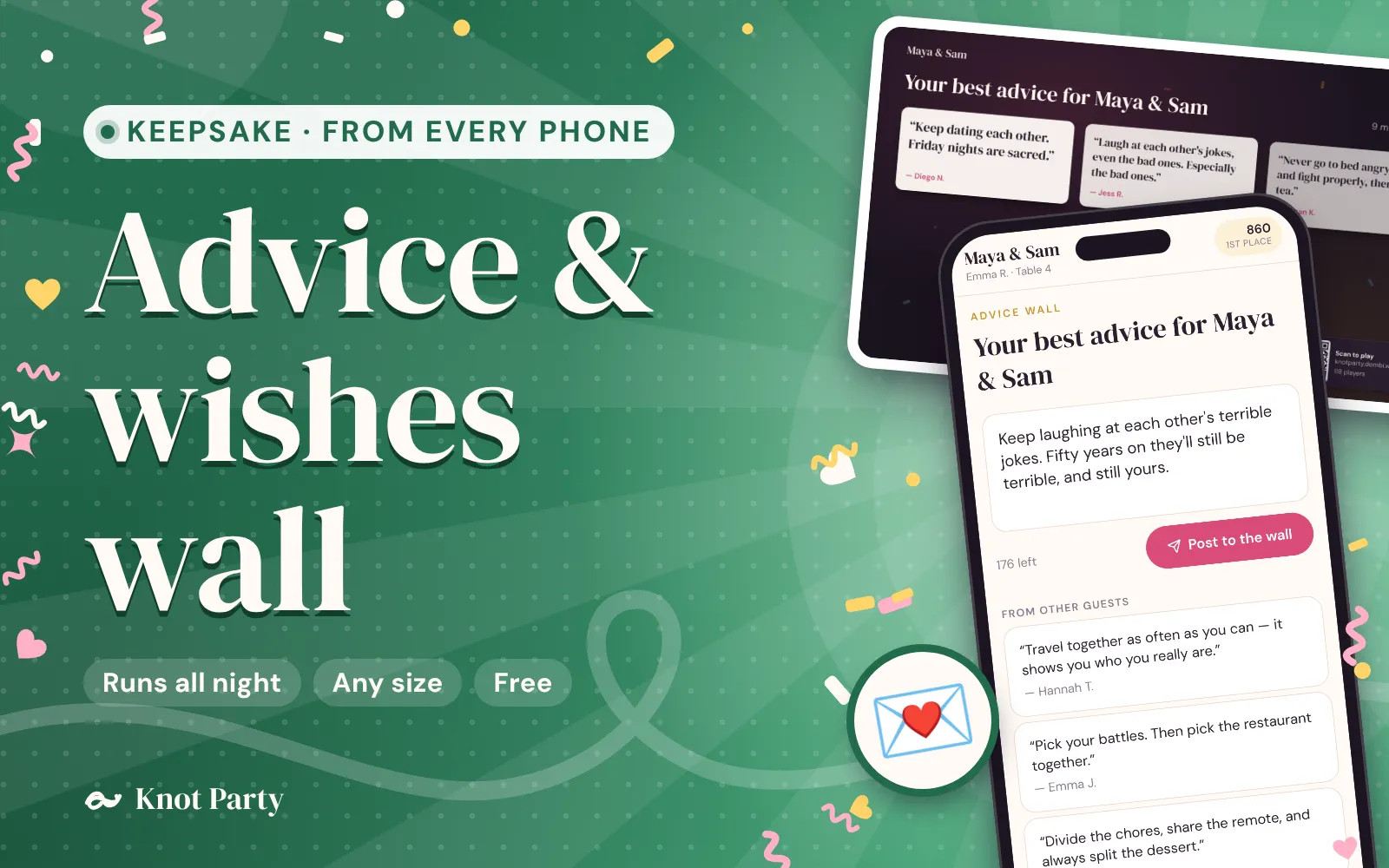
Runs in the background while people mingle. Married guests on both sides will have things to say.
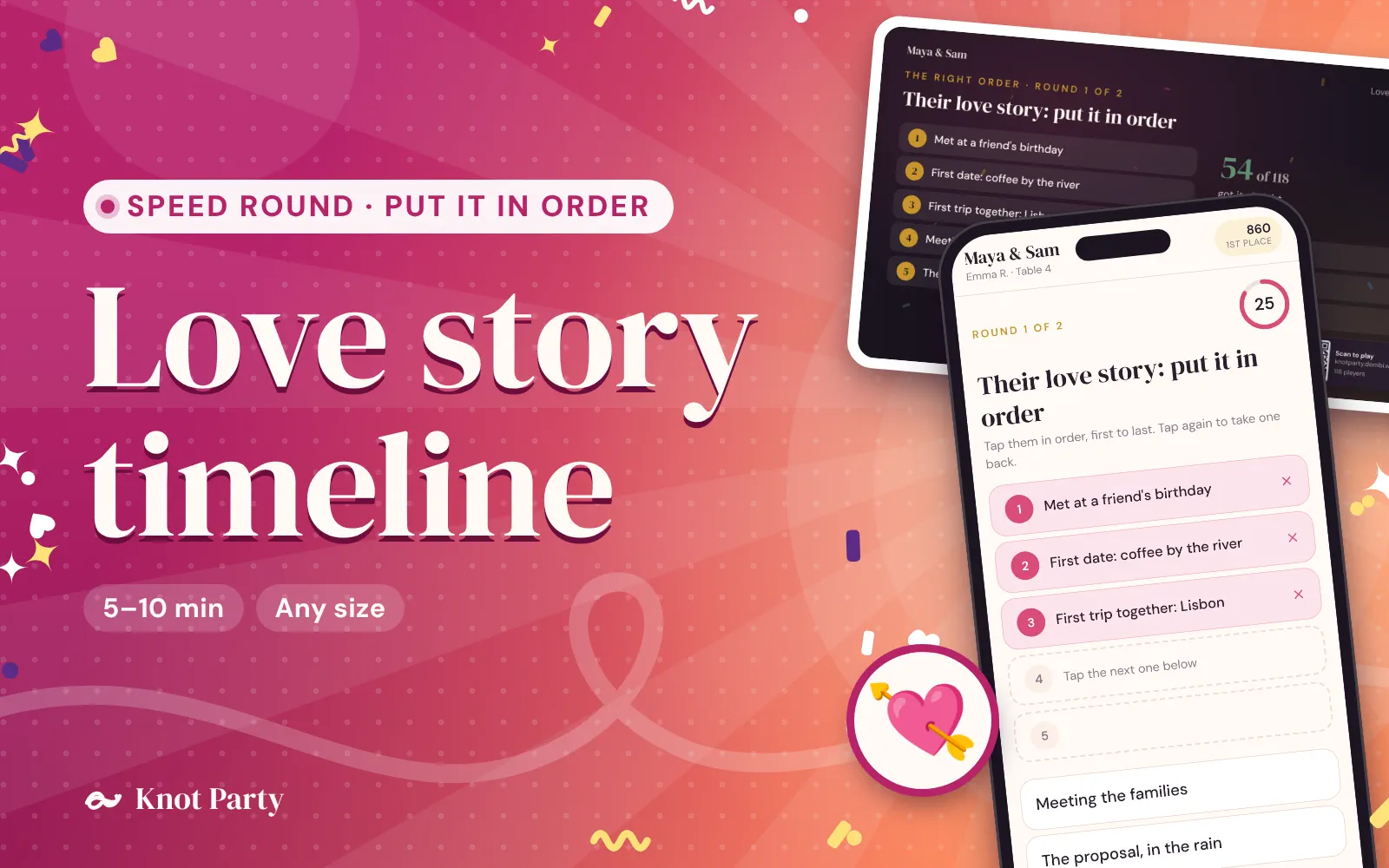
A short round to close the games before the toast: the timeline ends with the proposal.
Short, story-led games that tell your story to people meeting you as a couple for the first time. Guests can answer from the kitchen or the garden; the TV shows the results to whoever is in the room.
A timed quiz about the two of you: where you met, who said "I love you" first, the proposal. It doubles as the how-we-met story for guests who only know one of you.
Play it on phones: Timed questions about the two of you, with a leaderboard on the big screen. Try the demo
Three short stories about you; guests spot the one that isn't true. It lets you tell three anecdotes without making a speech.
Play it on phones: Three stories about the couple; guests spot the one that isn't true. Try the demo
"How many days since our first date?" Every guest can have a go, whether they've known you for ten years or ten minutes. Closest wins.
Play it on phones: How many days since their first date? Closest guess wins. Try the demo
Guests put your milestones in order: first date, first trip, moving in, meeting the parents. The timeline ends with the proposal, which makes it a natural lead-in to the toast.
Play it on phones: Put the couple's big moments in the right order, fastest correct wins. Try the demo
Guests predict the wedding itself: who cries first, how late the speeches run, the first-dance song. Open them on the wedding morning.
Play it on phones: Guests predict the couple's future; open them on your first anniversary. Try the demo
Free printable: Prediction cards
Runs quietly in the background while people mingle. Married guests on both sides will have things to say, and you keep every message.
Play it on phones: Guests send advice and wishes from their phones; the couple keeps them all. Try the demo
Free printable: Advice card printable
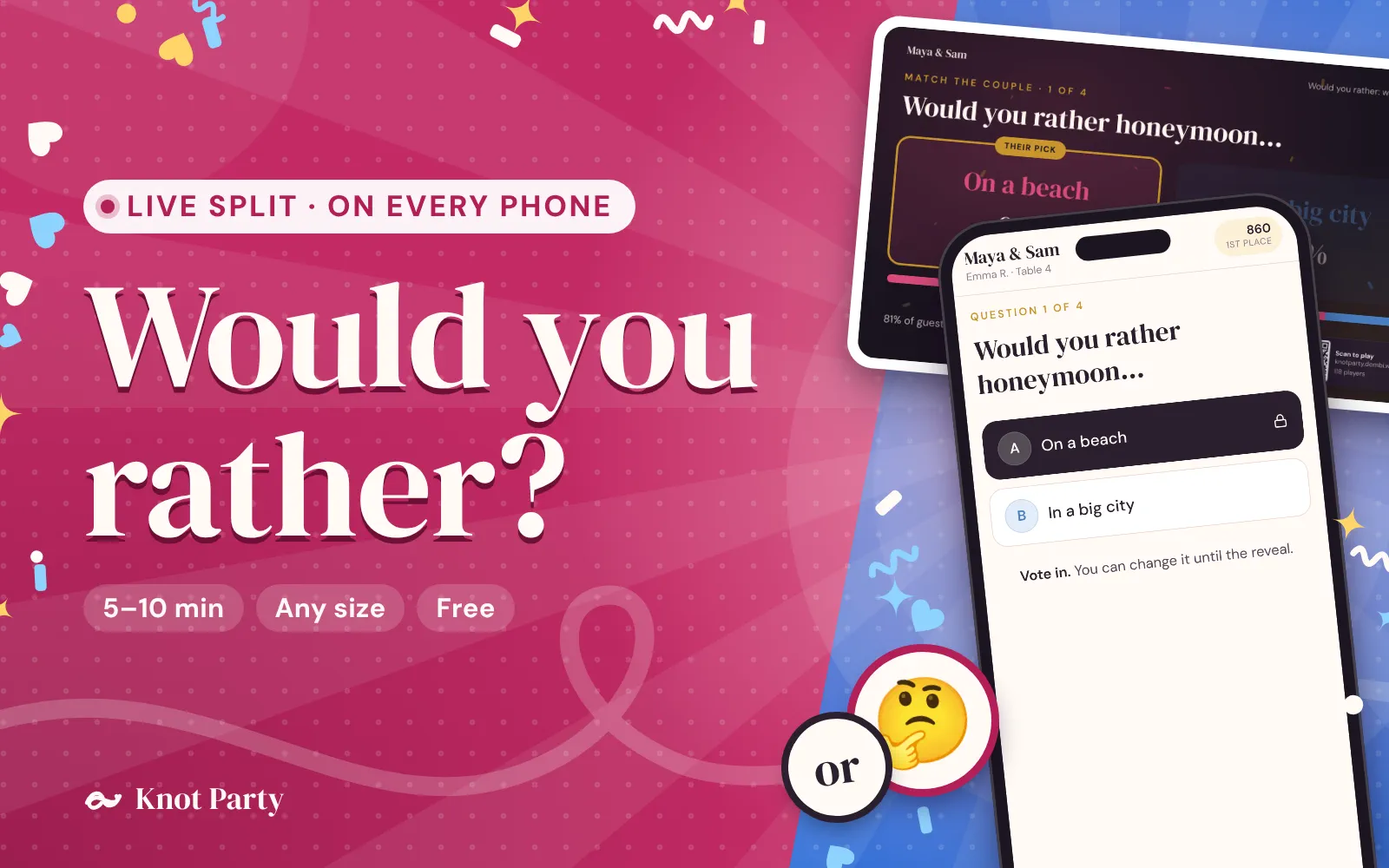
Let the room vote on your actual decisions: a summer or winter wedding, a beach or a city honeymoon, a band or a DJ. You don't have to follow the result.
Play it on phones: Two choices, live split on the screen, and the couple answers last. Try the demo
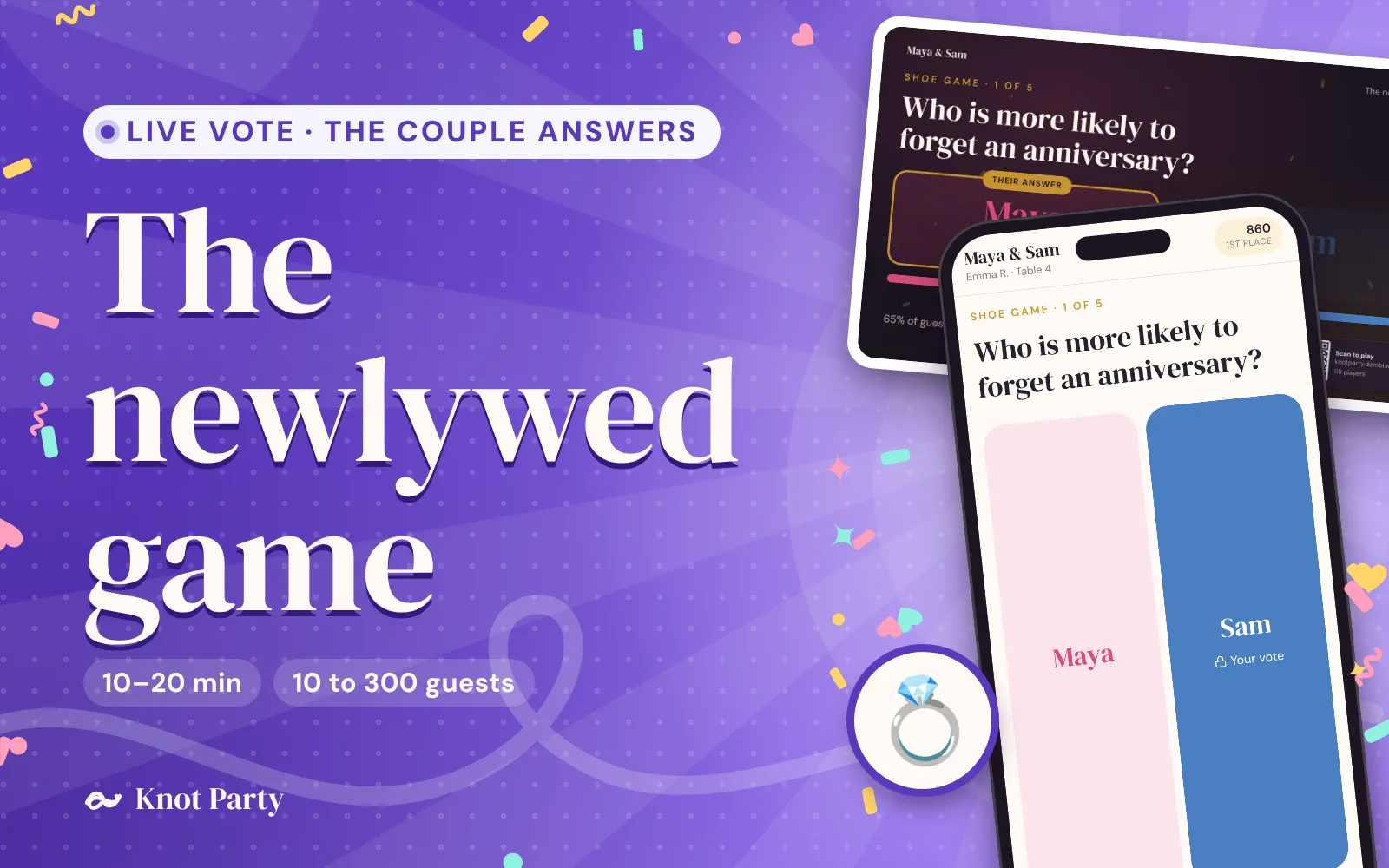
You each answer questions about the other, and guests vote on whether you'll match. Good at an evening party with mostly friends.
Play it on phones: How well do they know each other? Guests vote before every answer. Try the demo
Often the engagement party is the first time both families and both friendship groups are in one room. These games do the introductions for you, so nobody spends the evening only talking to the people they came with.
A bingo card of facts about people in the room: "has known one of the couple since primary school", "travelled the furthest", "has been married over 40 years". Guests find someone for each square.
Free printable: Bingo card generator
A big map or a board where each guest adds a pin or a sticker for where they met one of you: school, work, a flat share, a family wedding. By the end of the night, the board shows both your lives.
Baby and childhood photos of both of you, and of both sets of parents, on one board. Guests match each photo to the person. The two families end up comparing notes over the resemblance.
Teams mix both families and both friendship groups, and answer questions about both of you. Nobody wins alone, so everyone has to talk to someone new.
Quieter games that leave you with something to open later.
The story of the proposal with words taken out. Guests call out words without hearing the story, then someone reads the ridiculous version, and you tell the real one.
Guests write a note to the two of you, to be opened on the morning of the wedding. Some will be funny, some will make you cry before the ceremony.
Guests suggest one thing you should do together before the wedding: a trip, a dance class, a dinner at the place you had your first date. Pick a few to actually do.
For a three-hour evening party of 25 to 80 guests, at home or in a private room. Two or three hosted games is plenty.
First 45 minutes
Find the guest cards and the how-do-you-know-them board by the door; advice wall and predictions open by the drinks. No announcements yet.
After 45 minutes
Once most guests have arrived. Ten minutes at most.
Shortly after
Five rounds, with the two of you telling the true stories.
Before the toast
The answer to "days since our first date" makes a good line in the toast.
Last hour
Read a few advice messages near the end, and seal the predictions for the wedding morning.
In a home, people stand and drift between rooms. Avoid games that need everyone seated and silent. Couple trivia on phones works because guests can answer from the kitchen; the TV in the living room shows the leaderboard for whoever is in there. Background games like the how do you know them board and the time capsule suit a house party best.
In a private room or a restaurant, guests are usually seated in groups, which makes team games easy. Play the two-family quiz with mixed tables, and ask the venue whether you can plug a laptop into their screen for the results. If there's no screen, every phone game still works: guests see the questions and scores on their own phones.
If it's an evening party without children or grandparents, you can make would you rather and two truths and a lie cheekier. Keep couple trivia clean: it's the game that tells your story, and someone will film it.
Free to make and print, with no sign-up. Most of the questions you write now can be reused at the wedding.
One or two short ones, yes, especially if the families haven't met. They give people something to talk about besides how the two of you met.
A quiz about the couple, two truths and a lie, a guessing game like days since the first date, and something that runs in the background such as predictions or an advice wall. Add a find-the-guest card if the families don't know each other.
Give them a reason to talk: find-the-guest bingo, mixed teams for a quiz, and name tags that say how each guest knows you. Ask one person from each side to make introductions in the first half hour.
Ten to twenty minutes in total for the hosted games. Short games leave people wanting more, which is the right feeling going into the wedding.
Yes, and many couples do. Change some of the questions so the guests who were at both get something new.
No. A TV makes the reveals more fun, but every phone game shows the questions and scores on guests' phones too.