Guest experience
How to keep wedding guests entertained, from the ceremony to the last song
Guests rarely remember a wedding as boring because of the big moments. They remember the hour of standing around after the ceremony, the long wait for dinner, and the forty minutes while the room was turned around. Fix those, and you've fixed guest entertainment.
By The Knot Party team · Published · 5 min read
Where a wedding day actually sags
Watch a wedding from a guest's chair and you'll see the same pattern almost every time. The ceremony holds attention. The first drinks are lively. Then, about forty minutes into the photo session, energy drops: the drinks are finished, the canapés have stopped, and nobody knows how long until they can sit down. The same thing happens if the speeches run long, and again while the room is cleared for dancing.
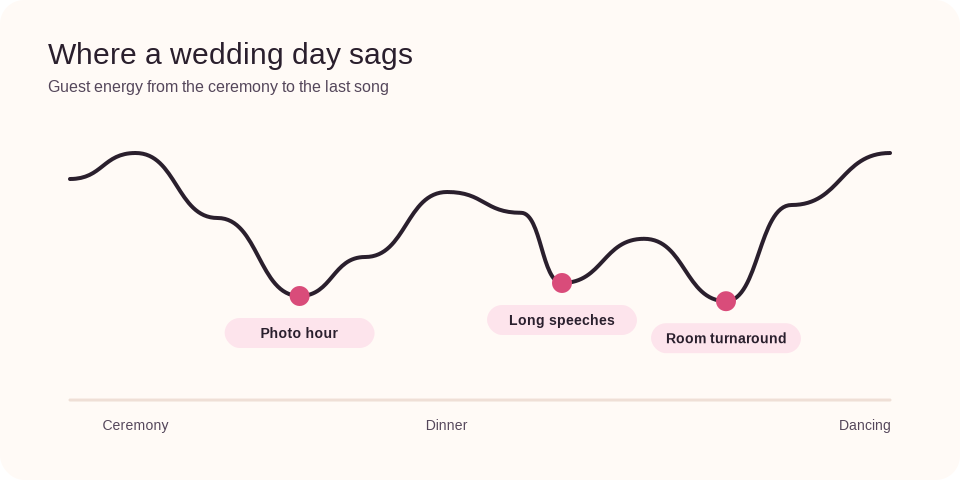
None of these lulls are anyone's fault. They are built into how weddings run. The fix isn't to fill every minute with entertainment; it's to make sure each lull has something gentle in it, and to shorten the ones you can.
First, shorten the gaps you can
The cheapest entertainment is a shorter wait. Before you book anything, look hard at your timeline:
- Do the family group photos before the ceremony, or straight after it, with a printed shot list and a cousin to round people up. A photographer with a list finishes group shots in 20 minutes; one without can take an hour.
- Ask your caterer what they need between courses, and don't add buffer on top.
- Agree a time limit for each speech, and ask the speakers to time themselves out loud at home. Five minutes each is plenty.
- Ask the venue whether they can turn the room around in stages, so guests aren't all moved out at once.
Food and drink do most of the work
Guests who have a drink in hand and food coming round are content for a surprisingly long time. If your photo hour is long, more canapés will do more for the mood than any entertainer. A late-evening snack (bacon rolls, pizza, a cheese table) around 9pm revives a dance floor better than a song request.
Games for the gaps, chosen by the gap
Different lulls need different kinds of game. Here's the short version, and the reception timeline with games shows it on a full day.
| The lull | What guests are doing | What works | Example |
|---|---|---|---|
| Photo hour | Standing, drinking, drifting | Self-running games: no host, no announcements | Wedding bingo, predictions |
| Between courses | Seated and attentive | A short hosted quiz | Couple trivia, table vs table |
| After the main | Fed, relaxed | A couple-in-the-spotlight game | The shoe game |
| Room turnaround | Waiting to dance | Something musical | Finish the love song |
Notice what's missing: the dance floor. Once people are dancing, leave them to it. Nothing you add will improve on a full dance floor.
Looking after the guests who don't dance
About half your guests won't spend the evening dancing: grandparents, people who don't know many others, anyone who has had a long journey. A wedding that only entertains the dance floor leaves them at the tables for three hours. Give them somewhere comfortable to sit away from the speakers, and something to do. Phone games are good here because they don't require standing up or joining a group: bingo keeps running all night, and the advice wall is a favourite of older guests who have plenty of advice to give.
Children at the wedding
Bored children make their parents miss the wedding. A small activity pack on the children's table, a kids' bingo card and a corner with cushions and a film for the late evening go a long way. We cover this in detail in kids at weddings: games and entertainment.
What's worth paying for, and what isn't
There is a whole industry of wedding entertainment: magicians, caricaturists, singing waiters, photo booths. Some are wonderful. Before booking, ask one question: which lull does this fill? A magician at cocktail hour fills a real gap. A magician during dinner competes with conversation. A photo booth on the dance floor fills nothing, because the dancers are already happy; one near the bar in the late evening gives non-dancers something to do.
- Usually worth it: a good DJ or band who reads the room, enough food, a well-briefed MC.
- Often worth it: something for the photo hour (lawn games, a roaming entertainer, self-running games), a late snack.
- Rarely worth it: entertainment during the meal, anything booked to fill a slot that doesn't need filling.
The MC makes the difference
A confident MC is the single most effective piece of guest entertainment you can have, and it often costs nothing. They tell guests what's happening next (which removes the "how long until dinner" anxiety), introduce the games, keep speeches on time and give the room energy at the turnaround. If your venue coordinator isn't doing this, ask a friend who's comfortable with a microphone, and give them a written running order.
Big weddings and small weddings
Big weddings (150 guests and up) lose energy in the gaps faster, because guests know fewer people. Games where everyone plays on their own phone and the results appear on a screen work well here; see our games for large groups. Small weddings are different: guests often know each other, and a single long table becomes its own entertainment. Read our guide to wedding games for small weddings.
Games that fill the lulls
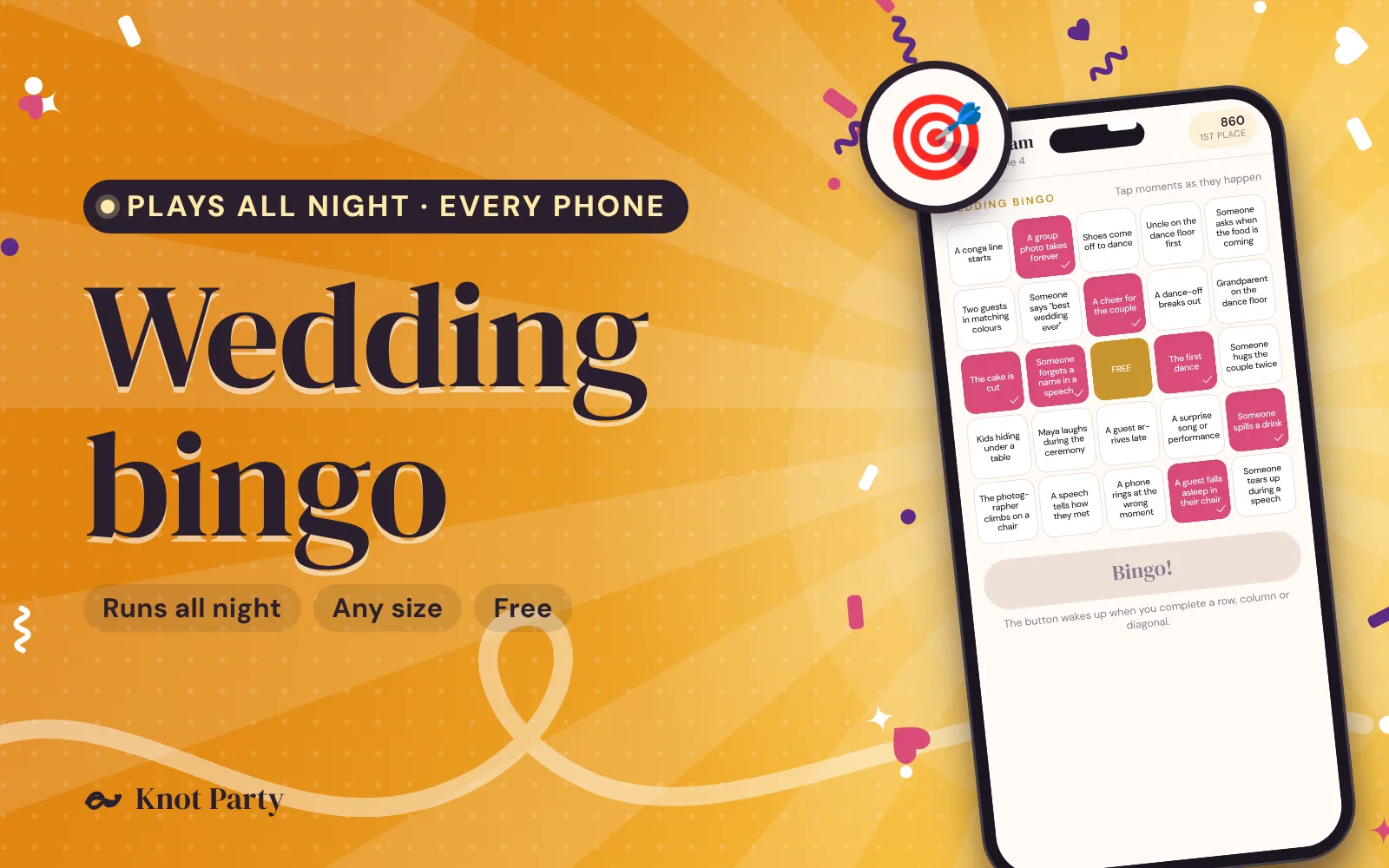
Wedding bingo
Every guest gets their own card of wedding moments to mark through the night.
- Free
- No screen needed
- Runs all night
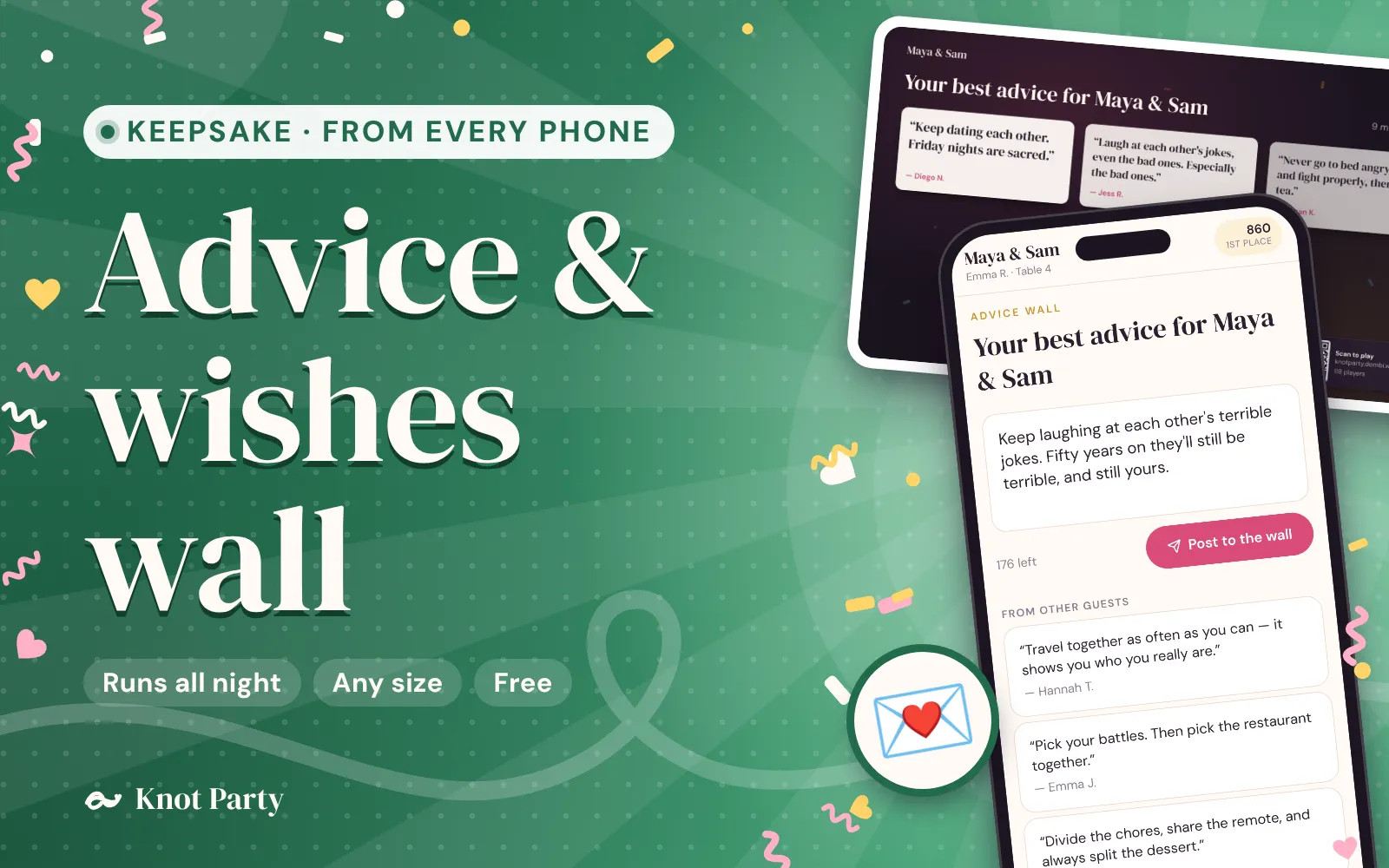
Advice and wishes wall
Guests send advice and wishes from their phones; the couple keeps them all.
- Free
- Screen optional
- Runs all night
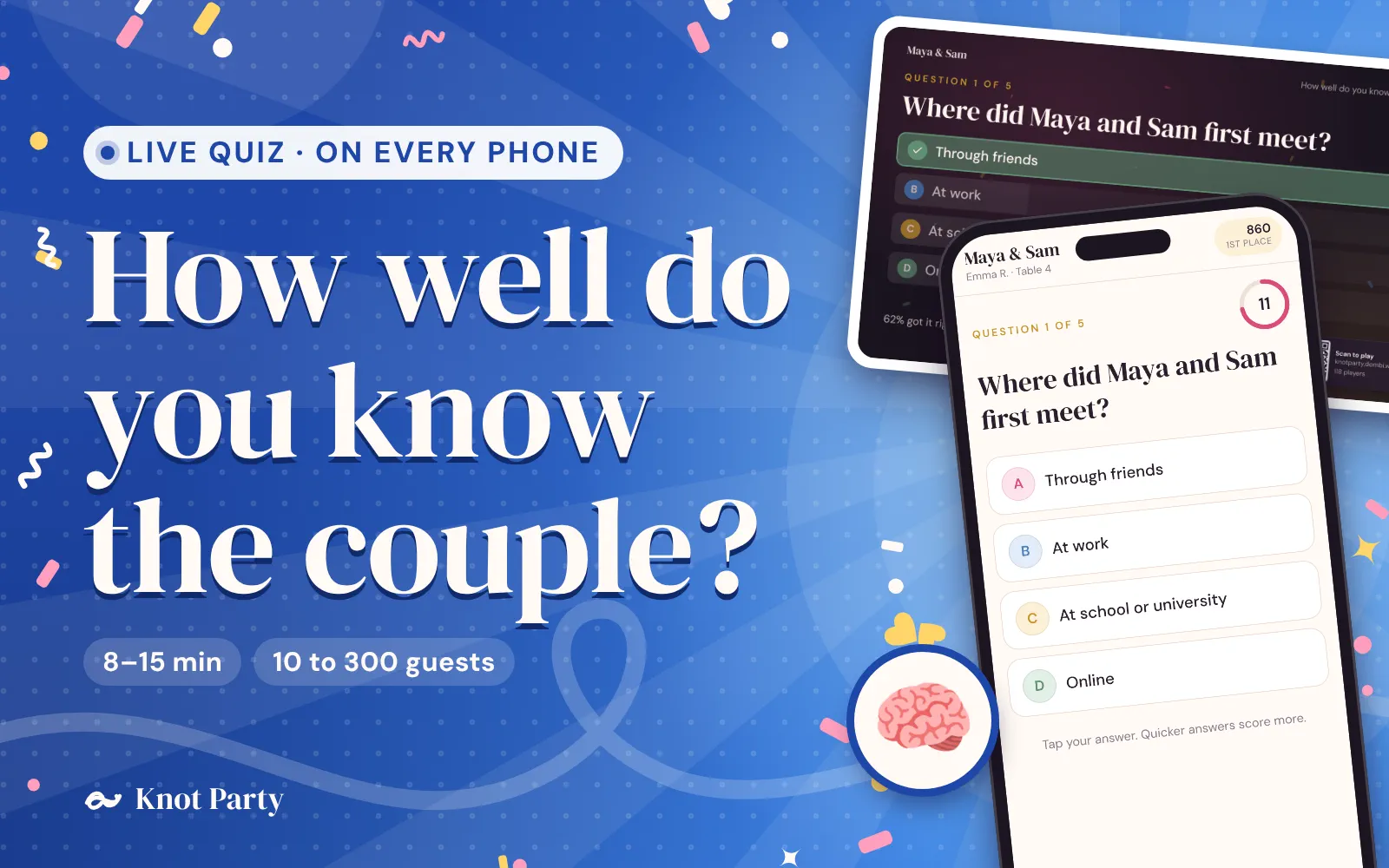
How well do you know the couple
Timed questions about the two of you, with a leaderboard on the big screen.
- Screen optional
- 8–15 min
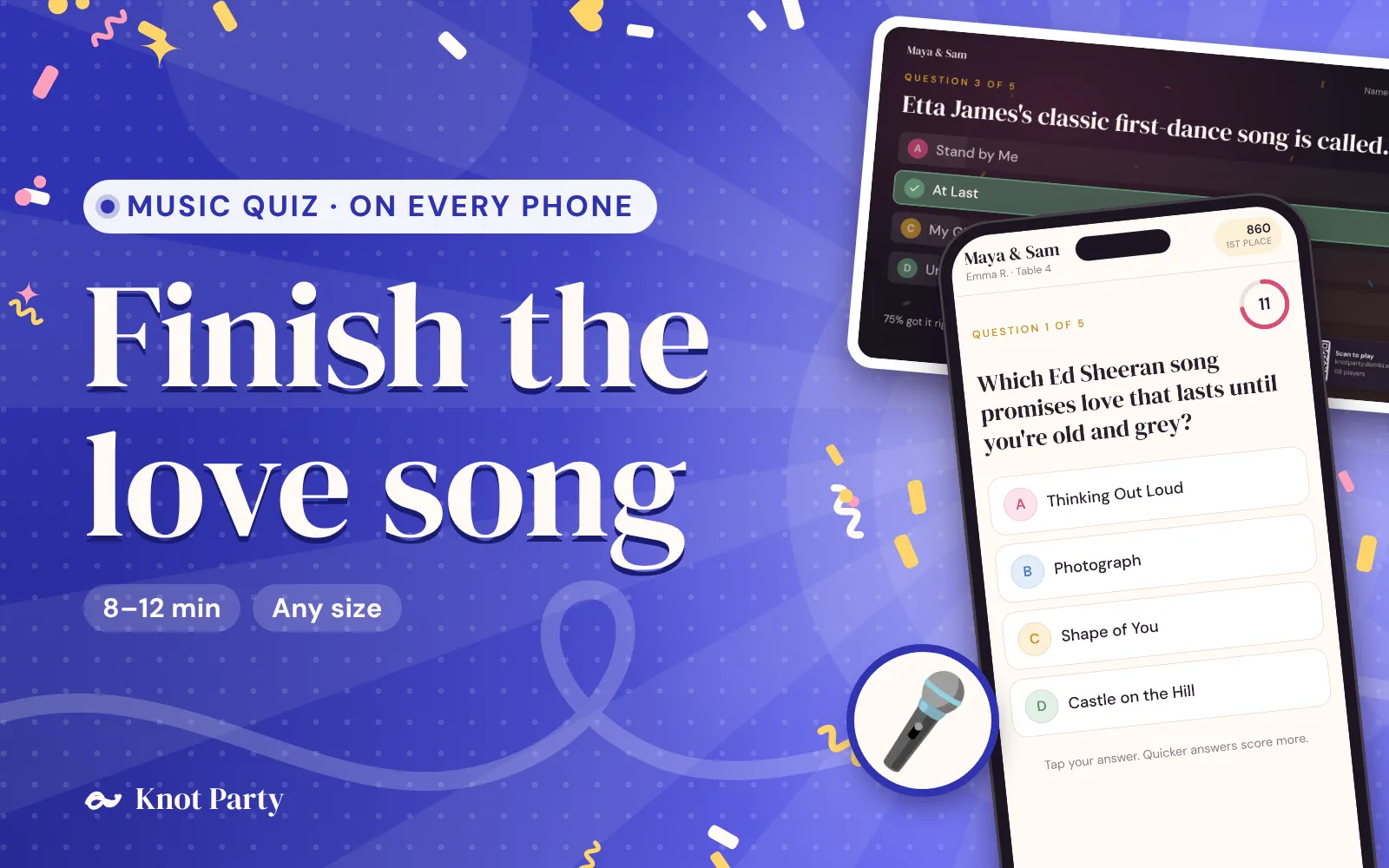
Finish the love song
A quiz about famous love songs: titles, singers and stories. Fastest right answer wins.
- Screen optional
- 8–12 min
Part of our guide to wedding games for guests.